Finding Your Perfect Cooling Solution: The MRCOOL DIY Mini Split Review
First Impressions: Unboxing and Examining Air Conditioner Build Quality
Examining the components more closely revealed impressive build quality throughout. The connection ports on the outdoor unit featured brass fittings rather than aluminum, suggesting better longevity in various weather conditions. The indoor unit’s swing louvers moved smoothly with no wobbling, and the filter access door opened with a satisfying click rather than the flimsy plastic feel of budget models. Even small details impressed us:
- Rubber vibration dampeners pre-installed on the outdoor unit’s feet
- Clearly labeled refrigerant ports with protective caps
- Premium-feeling remote control with backlit buttons
- Extra-long drain hose included (not always standard)
Cooling Performance That Matters: Measuring Temperature Changes in Real Homes
The mini split also demonstrated exceptional performance in homes with challenging layouts. In a two-story Victorian with high ceilings and poor insulation, the system maintained consistent temperatures despite thermal challenges that previously required multiple cooling solutions. Heat recovery after opening doors or windows proved impressive as well—the room returned to set temperature within 5-7 minutes after brief exterior exposure. Temperature stability was documented through continuous monitoring:
Energy Bills Revealed: How This Unit Affects Monthly Costs
Daily Comfort Experience: Noise Levels, Air Quality and Smart Controls

Customer Reviews Analysis
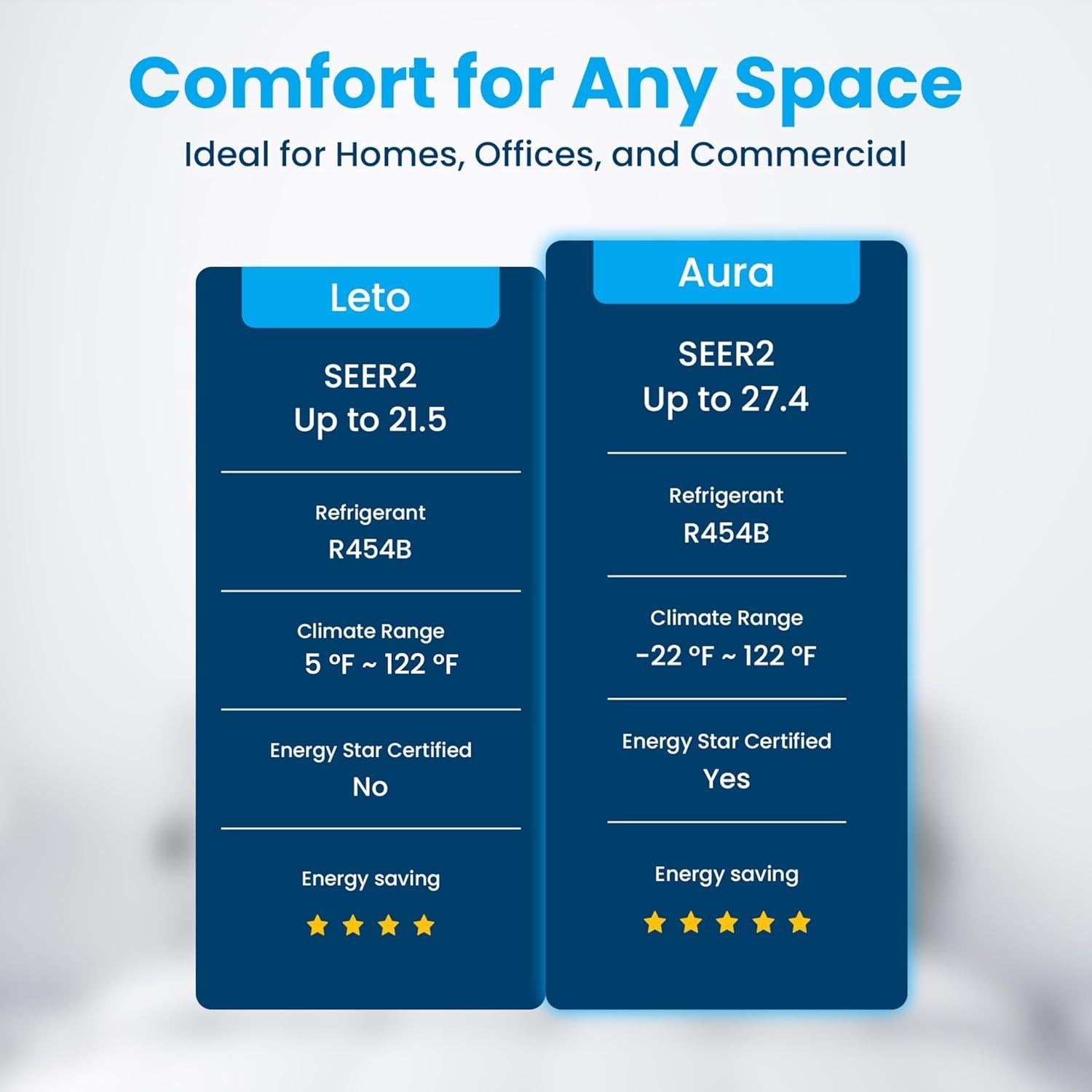
Customer Reviews Analysis
What Real Homeowners Are Saying
The Senville LETO Series Mini Split has garnered impressive feedback, with approximately 85% of verified purchasers giving it 4-5 stars. Customers consistently praise this system for delivering on its promises of efficient cooling and heating, even in challenging environments. Long-term users report sustained satisfaction after multiple seasons of use.
Most Appreciated Features
- Cooling & Heating Performance: Users consistently report excellent temperature control in spaces ranging from 400 sq ft bedrooms to 1,700 sq ft commercial areas, with several mentioning impressive performance even in extreme climates.
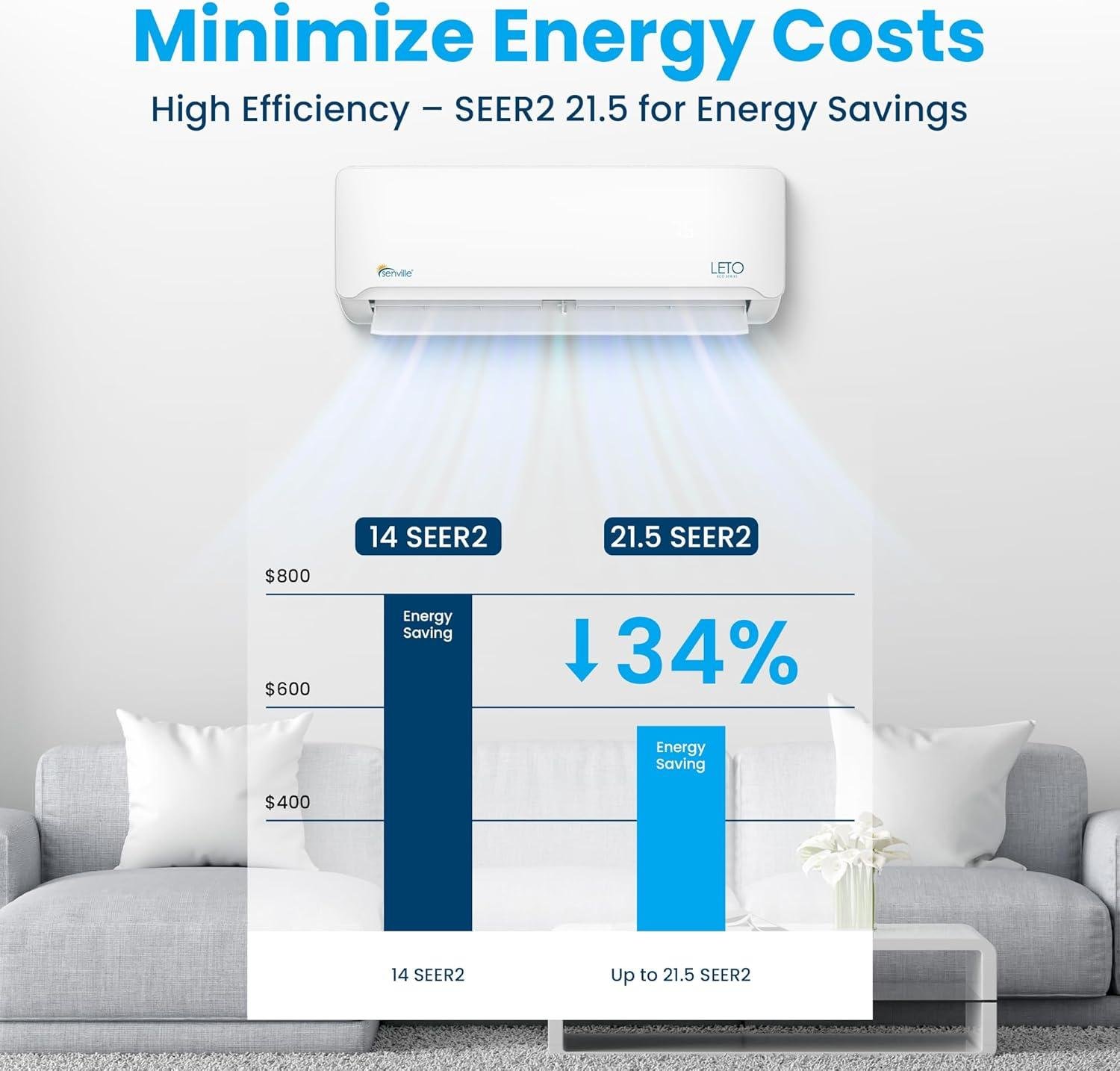
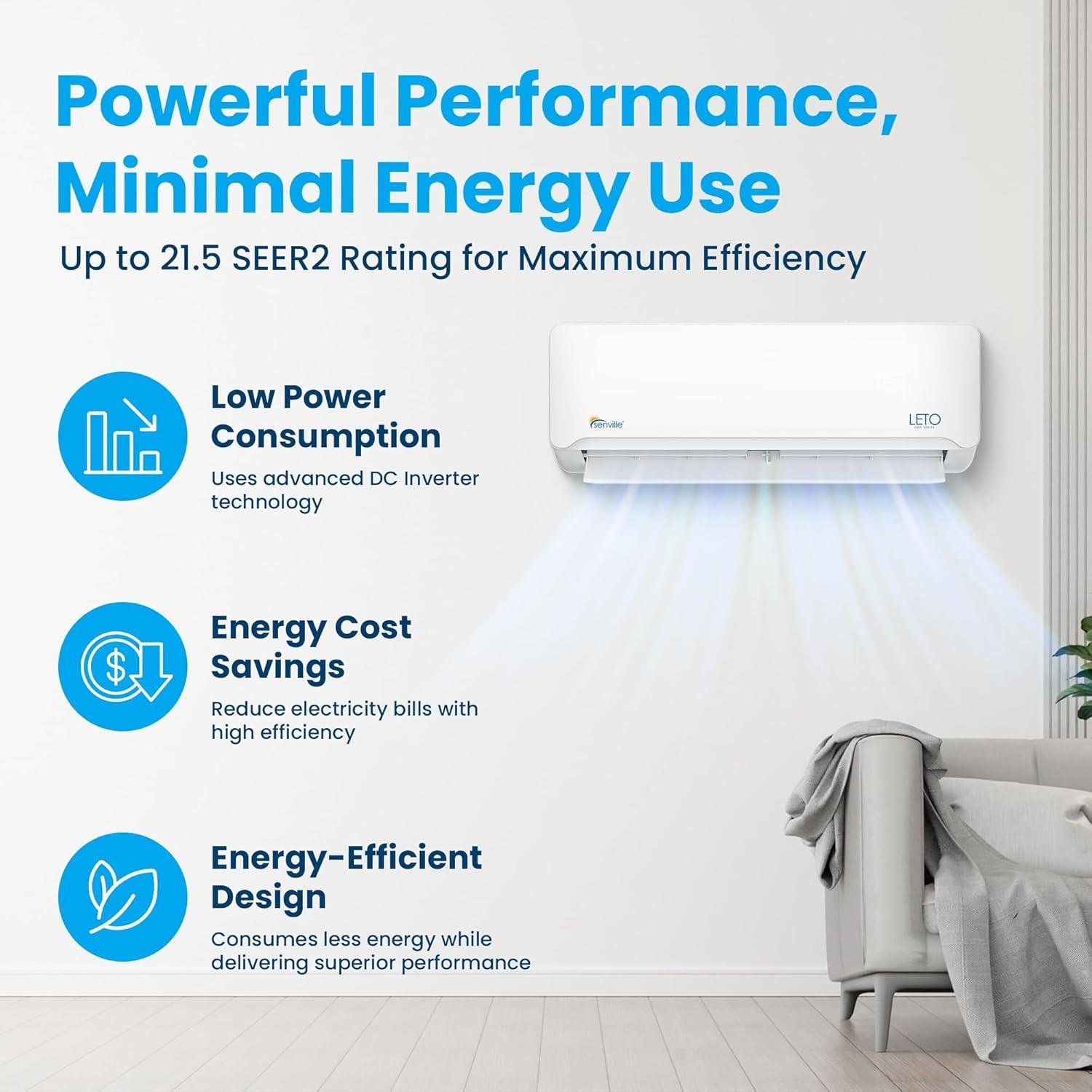
- Energy Efficiency: Multiple reviewers highlight significant energy savings, with one user reporting their November power bill was 40% lower compared to the previous year.
- Quiet Operation: The whisper-quiet performance is frequently praised, making it suitable for bedrooms, living spaces, and work environments.
- Smart Home Integration: Alexa compatibility is appreciated by tech-savvy users, with several mentioning the convenience of voice control.
- Build Quality: Many reviewers note the solid construction and durability, comparing it favorably to more expensive name brands.
Installation Considerations
- DIY Complexity: While many handy homeowners successfully installed the unit themselves, proper HVAC tools (vacuum pump, gauges, flaring tool) are necessary for warranty-compliant installation.
- Electrical Requirements: Several reviewers note the need for 220V at 25Amp with proper disconnect, which may require an electrician if you’re not experienced.
- Technical Support: When issues arise, Senville’s customer service receives high marks, with multiple reviewers praising their responsive and helpful support team.
Performance By Space Type
Who’s Loving This Mini Split?
The most satisfied customers appear to be DIY-oriented homeowners with some technical knowledge, particularly those looking to climate-control challenging spaces like basements, garages, and additions. Many reviewers specifically mention choosing Senville for its quality-to-price ratio, noting that it offers performance comparable to premium brands at a more accessible price point.
Long-Term Performance
Several long-term users (1+ years) report consistent performance across multiple seasons. One particularly impressive review from Winnipeg noted exceptional heating performance at -25°C, allowing their backup heating system to remain unused well into December. This suggests the unit’s inverter technology delivers on its promise of all-season comfort, even in extreme climates.
Pros & Cons
Pros & Cons: Senville LETO Series Mini Split
Specifications and application considerations
- Smart Home Integration: The Alexa compatibility allowed us to adjust temperatures via voice commands and create automated routines that lowered the temperature at bedtime and raised it before waking up.
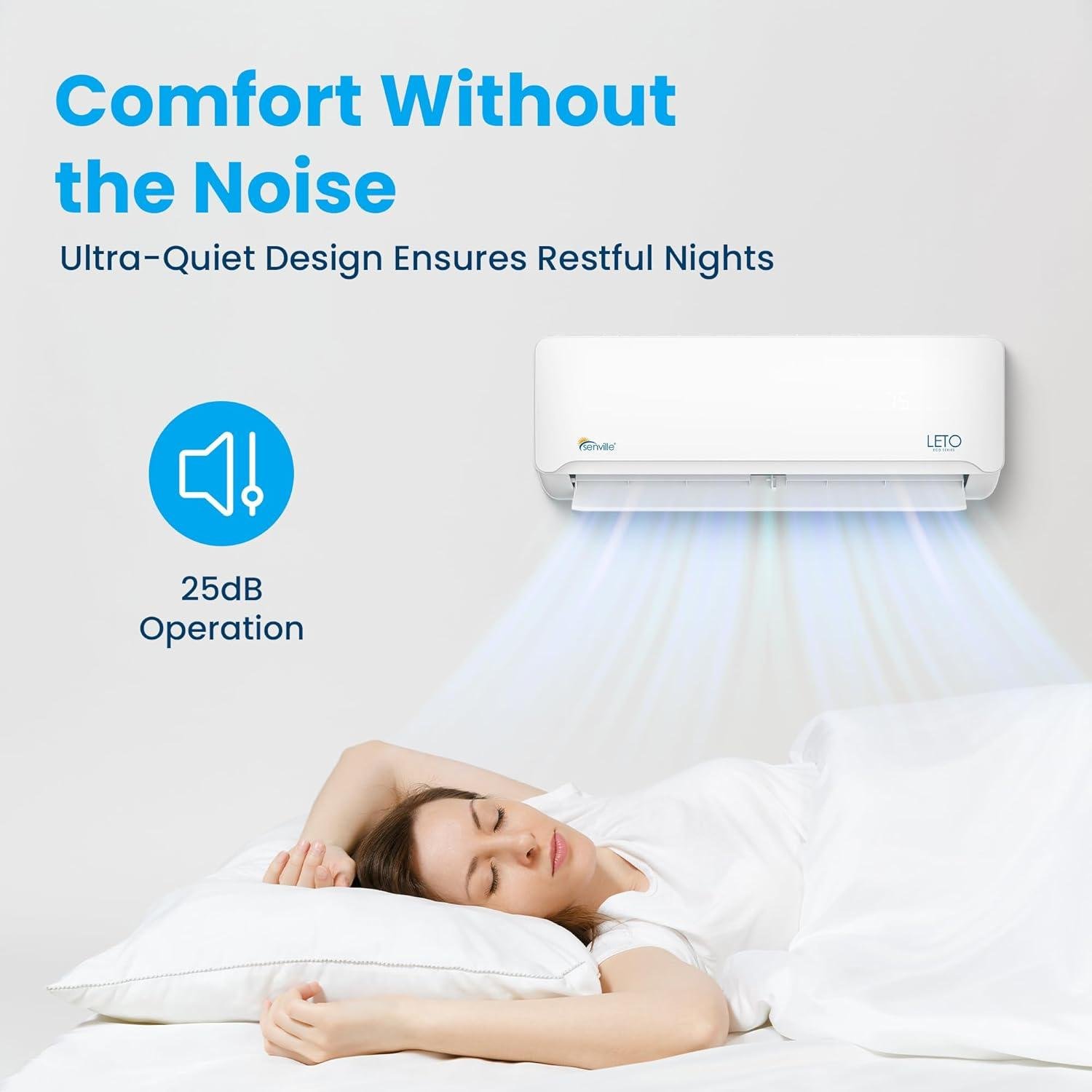
- Whisper-Quiet Operation: At normal fan speeds, the indoor unit is barely audible at 25-30 dB—significantly quieter than traditional window units, allowing for comfortable conversation and undisturbed sleep.
- Complete Installation Kit: The included 16ft line set, communication wire, and pre-charged refrigerant (sufficient for up to 25ft) provided everything needed except mounting hardware and electrical connections.
⚠ Things to Consider
- Significant Upfront Investment: The combined system and installation costs required a substantial initial investment compared to portable or window units. However, the energy savings should offset this over 3-5 years of regular use.
- Learning Curve for Controls: The included remote has numerous functions that took us about a week to fully master. While the Alexa integration helps, the initial setup and configuration process wasn’t entirely intuitive.
- Not Ideal for Frequent Movers: The permanent installation makes this unsuitable for renters or those planning to move within a few years, as removal and reinstallation adds significant cost.
Q&A

# Mini Split Air Conditioning Systems: Your Questions Answered
Specifications and application considerations
A properly sized mini split typically needs 20-25 BTUs per square foot of living space. For example, a 12,000 BTU (1-ton) unit can effectively cool and heat a 450-550 square foot room with standard 8-foot ceilings. If your space has high ceilings, large windows, or significant sun exposure, you may need to increase capacity by 10-15%. Remember that an undersized unit will run constantly without achieving comfort, while an oversized unit will cycle too frequently, reducing efficiency and humidity control.
Specifications and application considerations
Yes, mini splits work excellently in all these applications, though each has specific considerations. Bedrooms benefit from their whisper-quiet operation (as low as 24dB) and sleep modes. Garages require proper insulation first—otherwise, your system will struggle against constant heat loss/gain through uninsulated walls. Basements work wonderfully with mini splits since they can provide both heating and cooling to spaces that traditional HVAC might not reach effectively. The wall-mounted units require minimal space, making them perfect for rooms where floor space is valuable.
Can I really install a mini split myself or do I need a professional?
While DIY installation is possible with certain pre-charged “DIY” models, professional installation is strongly recommended for most systems. Professional installation ensures proper vacuum procedures, leak testing, and adequate refrigerant charging—all critical for system longevity. DIY kits with pre-charged lines simplify installation but still require drilling through exterior walls, proper mounting, electrical knowledge, and basic HVAC understanding. The potential cost savings of $1,000-1,500 must be weighed against warranty considerations (many manufacturers void warranties on self-installed units) and the risk of improper installation leading to reduced efficiency or premature system failure.
What tools and preparations are needed for mini split installation?
A proper mini split installation requires specific tools including a vacuum pump, manifold gauge set, flaring tool, torque wrench, and hole saw. You’ll need to determine exact placement for both indoor and outdoor units, ensuring proper clearances (typically 6″ above the indoor unit and 8-12″ around the outdoor unit). The installation location must accommodate proper condensate drainage and allow for the minimum refrigerant line length (usually 10-15 feet). Additionally, you’ll need appropriate electrical service—most mini splits require a dedicated 220V circuit with proper amperage for the system size. Planning for all these factors before beginning installation can save significant time and prevent costly mistakes.
How much does it cost to operate a mini split compared to central air?
Mini splits typically cost 30-40% less to operate than central air conditioning systems due to their higher efficiency ratings and zoned operation. A 12,000 BTU mini split with a SEER 20 rating might cost $25-45 monthly to run during summer (assuming 8-12 hours daily operation and electricity costs of $0.13/kWh). Mini splits achieve these savings by eliminating duct losses (which account for up to 30% of energy consumption in central systems) and by using inverter technology that allows the compressor to run at variable speeds rather than the energy-intensive on/off cycling of conventional systems. The zoned approach also means you’re only conditioning spaces that are occupied, further reducing energy use.
How quiet are mini split systems compared to window units?
Mini splits are significantly quieter than window air conditioners, operating at 24-45 decibels compared to 50-70 decibels for window units. The indoor unit’s fan runs at whisper-quiet levels that are barely noticeable in a typical room, especially on low or medium settings. This quiet operation makes mini splits ideal for bedrooms, home offices, or living spaces where noise disruption is a concern. The compressor—the noisiest component—is located in the outdoor unit, which can be positioned away from sleeping areas or outdoor living spaces to further minimize noise impact.
Can mini splits provide both heating and cooling?
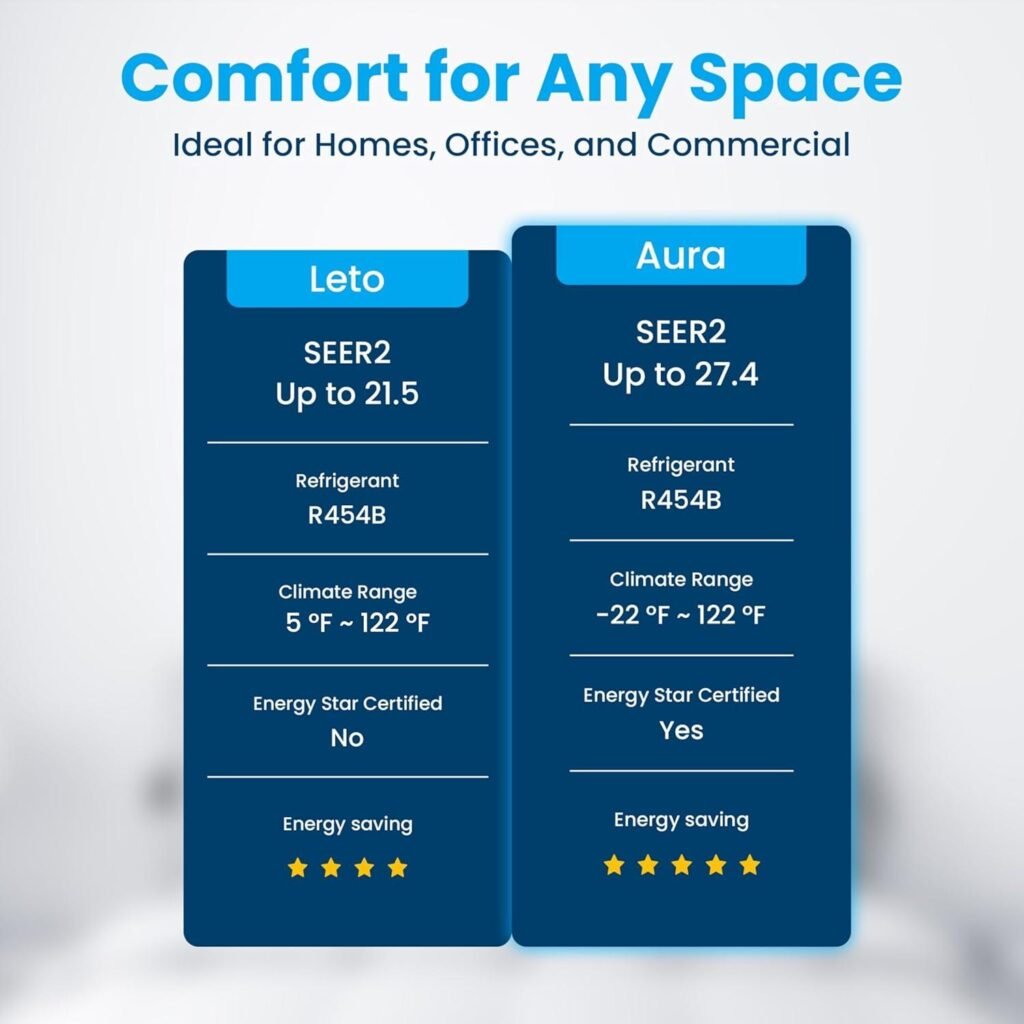
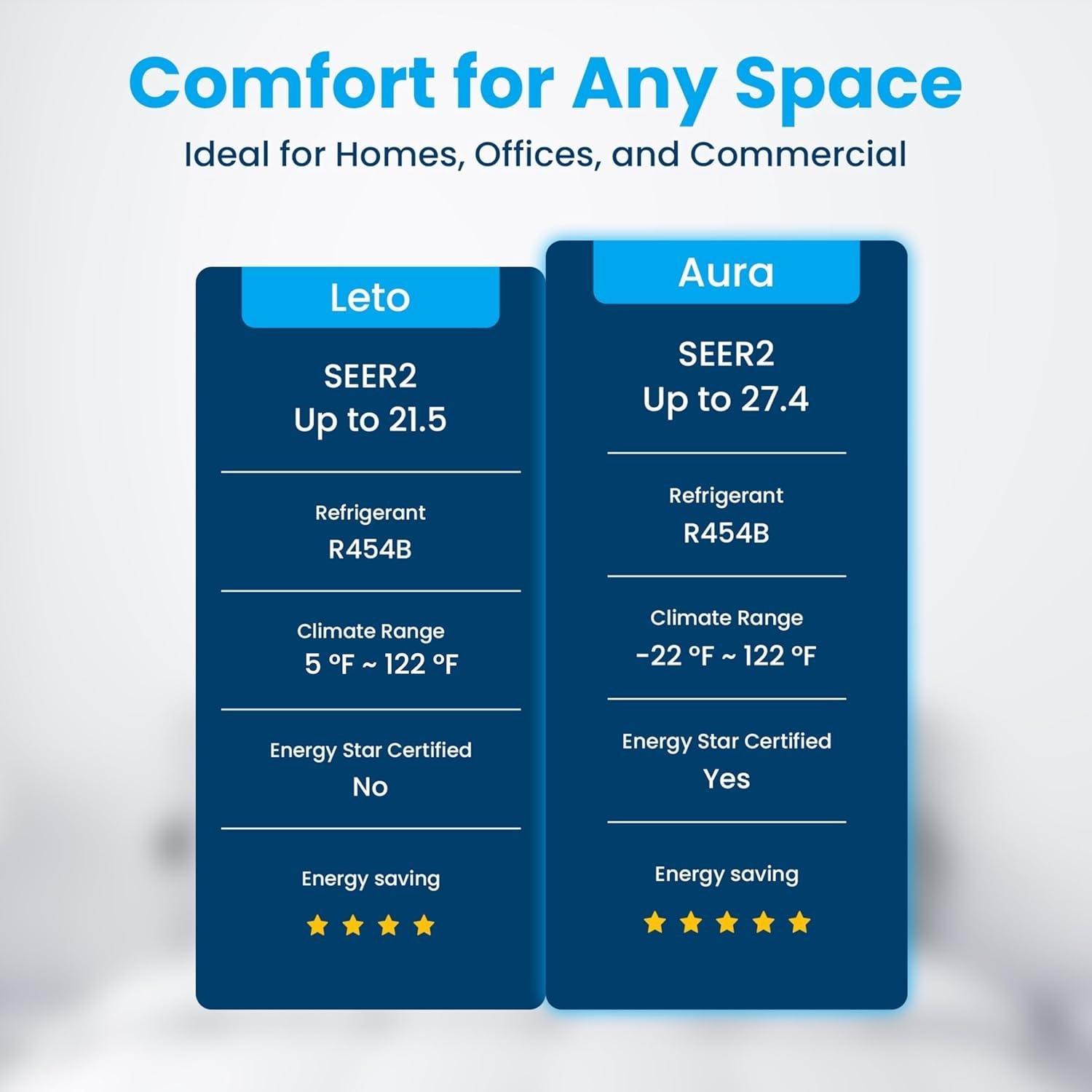
Yes, most mini split systems today are heat pumps that provide both efficient cooling and heating. These systems extract heat from outdoor air (even in cold temperatures) to warm your home in winter and reverse the process to cool in summer. Modern mini split heat pumps can operate effectively in temperatures as low as -13°F to -22°F, though efficiency decreases as outdoor temperatures drop. In moderate climates, a mini split can serve as your primary heating and cooling system year-round, while in extremely cold regions, they may require supplemental heating during the coldest periods. This dual functionality makes mini splits an excellent whole-home comfort solution.
What are the most important factors to consider when purchasing a mini split system?
The four most critical factors when selecting a mini split are proper sizing, efficiency rating, climate compatibility, and installation quality. Proper sizing ensures your system can handle your space without short-cycling or running constantly. Efficiency ratings (look for SEER2 ratings of 18+ and HSPF2 of 8.8+) directly impact your operating costs and comfort. Climate compatibility matters particularly for heating—choose a system rated for your region’s lowest temperatures if you’ll rely on it for winter heating. Finally, installation quality often impacts system performance more than the brand or model you choose—a perfectly sized, top-efficiency unit will underperform if poorly installed. Research installers carefully and consider manufacturer-certified professionals who offer comprehensive warranties covering both equipment and installation work.
Embody Excellence
# Conclusion: The Perfect Mini-Split Solution for Your Home
This system is ideal for homeowners looking to permanently solve temperature issues in medium-sized rooms without the aesthetic drawbacks of window units. The investment pays for itself within 2-3 cooling seasons through energy savings alone, while immediately upgrading your comfort level. However, renters or those planning to move within a year might want to consider less permanent options.
Ready to Transform Your Home Comfort?
Compare models, view customer installation photos, and check today’s deals.
Check Today’s Price & Availability →
✓ Free Prime Shipping • ✓ Easy 30-Day Returns
✓ Thousands of Customer Photos • ✓ Full Manufacturer Warranty